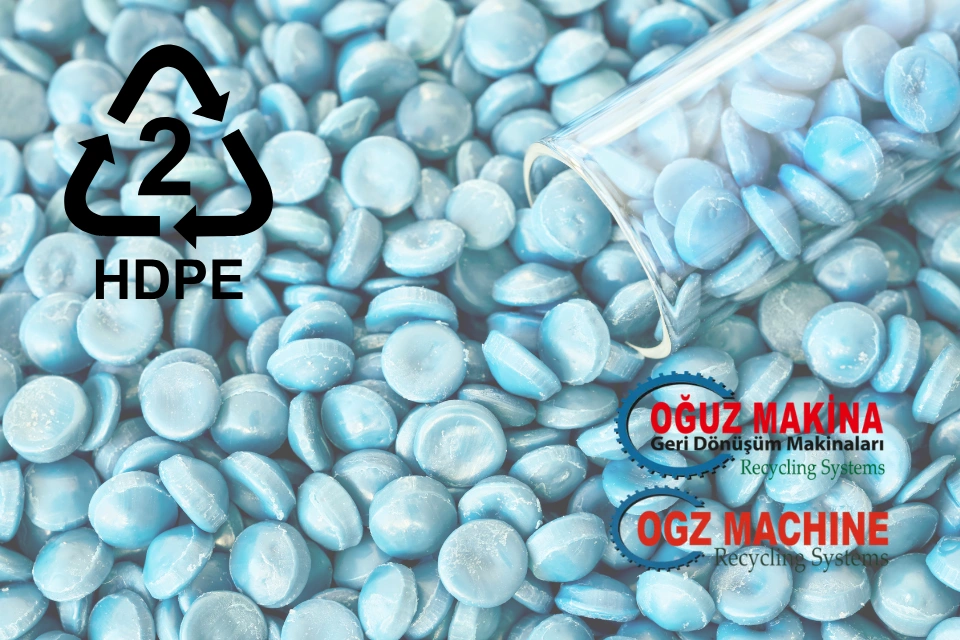
Plastic materials have become an indispensable part of modern life. Especially thermoplastics like HDPE (High-Density Polyethylene) and PP (Polypropylene) are widely used in various industries thanks to their advantageous properties. So, where do we encounter HDPE and PP plastics? In this article, we will explore the main usage areas of these two important plastics in detail.
Usage Areas of HDPE (High-Density Polyethylene)
HDPE stands out with its chemical resistance, durability, and flexibility. Here are the main usage areas of HDPE:
1. Packaging Industry
- Bottles for milk, water, juice, and other beverages
- Containers for detergents, shampoos, and cleaning products
- Plastic bags and supermarket shopping bags
2. Pipe and Infrastructure Systems
- Water, gas, and sewage pipes
- Agricultural irrigation pipes
3. Toys and Household Items
- Durable children’s toys
- Storage containers and kitchenware
4. Industrial Applications
- Chemical storage tanks
- Pallets and crates
5. Agriculture and Gardening
- Greenhouse covers
- Fences and garden equipment
Usage Areas of PP (Polypropylene)
PP is known for its lightness, high heat resistance, and chemical durability. Here are the prominent usage areas of PP:
1. Food Packaging
- Containers for yogurt, margarine, cheese, and other foods
- Disposable plates, cups, and lids
2. Automotive Industry
- Car bumpers, interior linings
- Battery cases and various connectors
3. Textile and Fiber
- Carpet backings
- Bags, ropes, and textile fibers
4. Medical and Laboratory Products
- Syringes, medical containers, and lab tubes
- Sterile packaging
5. Household and Office Items
- Storage boxes, furniture parts
- Files, folders, and stationery products
Conclusion
HDPE and PP plastics are safely used in many different fields thanks to their unique physical and chemical properties. From food packaging to infrastructure systems, from automotive to textiles, these plastics are indispensable in both industrial and everyday life.